Metal Fabrication Submittals: A Complete Guide for General Contractors

.png)
TL;DR: Metal fabrication submittals include shop drawings and product data for stairs, railings, ladders, embedded support steel, gratings, bollards, and elevator metalwork. These Division 05 submittals verify code compliance and catch coordination issues before fabrication begins.
Typical metal fabrication submittals include shop drawings and product data for stairs, railings, ladders, embedded support steel, gratings, bollards, and elevator-related metalwork that general contractors must submit for design team approval before fabrication begins.
Look, if you've managed a multifamily or commercial project, you know that metal fabrication submittals can feel like they're everywhere. And honestly? They kind of are. These submittals cover all the miscellaneous steel components that aren't part of the main structural frame but are absolutely critical for functionality and safety.
Why Metal Fabrication Submittals Matter
Metal fabrication submittals matter because they verify code compliance, establish quality baselines for installation, and catch coordination issues before expensive mistakes happen on site.
Here's the thing... these submittals aren't just paperwork. They're your proof that the guardrail system can actually handle that 200 lb point load the building code requires. They show that the elevator hoist beam is sized correctly (because yes, the elevator supplier excluded it from their scope). They confirm that those shelf angles supporting your brick veneer have thermal breaks in the right spots.
Key reasons metal fab submittals are critical:
- Demonstrate compliance with building codes and OSHA standards
- Establish quality baselines that inspectors check against
- Create accountability trail for project documentation
- Catch coordination conflicts before fabrication starts
- Prevent costly field mistakes and rework
The construction submittal process is where you catch the problems. Maybe the fabricator discovers that nobody detailed how that rooftop ladder attaches. Or the thermal break material needs to be swapped out because the architect wants a different R-value. Better to figure this out now than when the steel's already being welded.
Common Metal Fabrication Submittals You'll See on Most Projects
🏗️ Stairs and Railing Systems
Stair and railing submittals include detailed shop drawings showing stringers, treads, landing frames, guardrail assemblies, and often require structural calculations proving the system meets code-required loads of 50 lb/ft uniform or 200 lb point load on top rails.
You're going to submit drawings for every stair in the building. The egress stairs, the feature stairs in the lobby, the back-of-house stairs. Each one needs dimensions, connection details, nosing profiles, and baluster spacing that prevents a 4-inch sphere from passing through (that's your code requirement for guardrails).
What stair and railing submittals must include:
- Shop drawings for stringers, treads, landing frames, and connections
- Guardrail and handrail assemblies with dimensions and spacing
- Nosing profiles and stair tread details
- Baluster spacing verification (4-inch sphere test)
- Structural calculations sealed by PE for engineered systems
- Finish specifications (paint, powder coat, galvanizing)
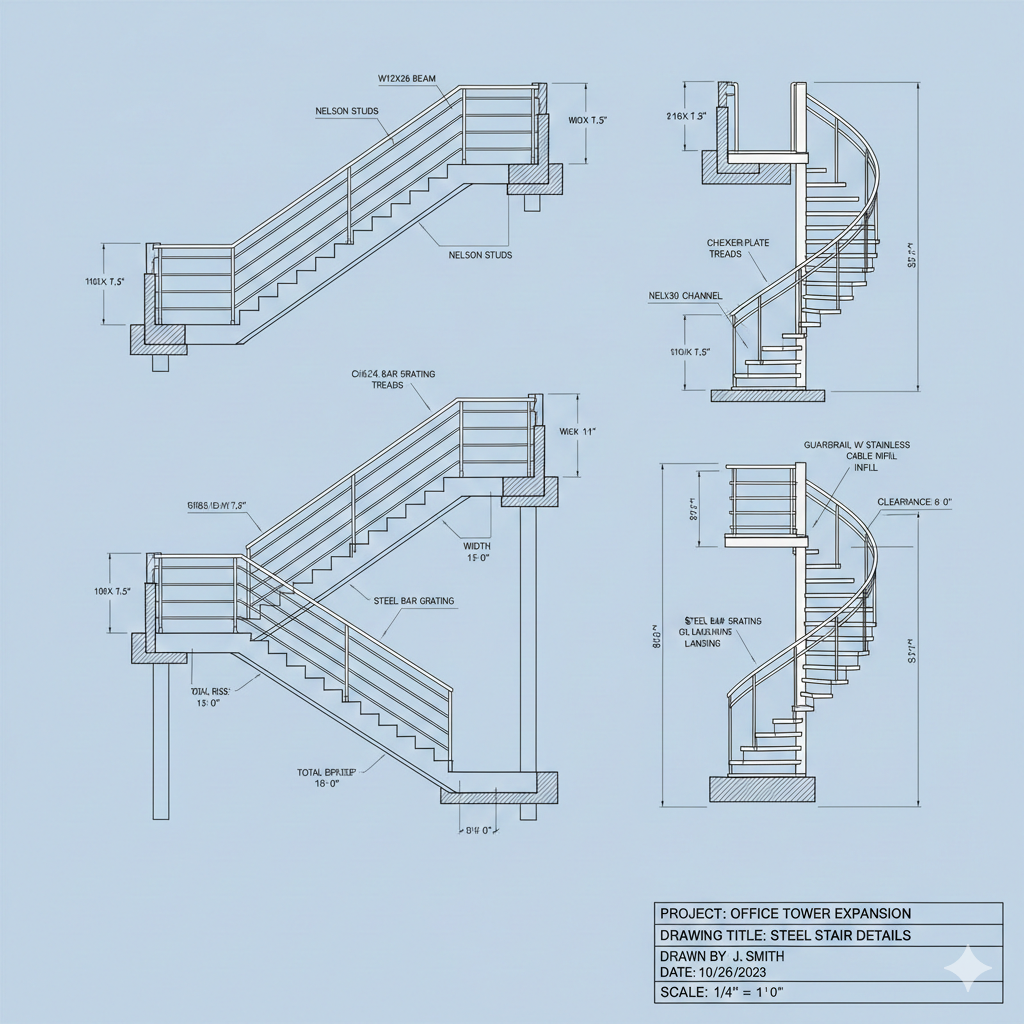
And here's what trips people up... modern projects often want glass railings or architectural systems. Those need engineered calculations sealed by a PE. The fabricator isn't just building a railing, they're engineering a system that has to resist specific loads without deflecting too much. Your submittal package needs those stamped calcsulations included.
Metal fabrication submittals rely heavily on shop drawings. Make sure you understand the difference between shop drawings vs product data before sending your package out for review.
🪜 Ladders and Access Platforms
Ladder submittals show rung spacing, mounting brackets, and safety systems, and must comply with current OSHA rules requiring personal fall arrest systems for fixed ladders over 24 feet (safety cages alone aren't accepted anymore on new installations).
Every project seems to need ladders. Roof access. Fire tank access. Cooling tower platforms. The shop drawings need to show how they mount, what the safety system looks like, and confirm they meet OSHA standards.
Essential ladder submittal components:
- Shop drawings showing rung spacing and side rail profiles
- Mounting brackets and anchorage details
- Fall protection systems for ladders over certain height
- Landing platforms at required intervals (typically every 50 feet)
- Grab bar extensions above roof parapets
- Product data for manufactured ladder components
One thing that changed recently... ladders over 24 feet now need actual fall protection systems, not just those old ladder cages. If you're still spec'ing cages, you're behind the code. Landing platforms are required every 50 feet on really tall runs.
🔩 Embedded Plates, Angles, and Support Steel
Embedded plate and support steel submittals include shop drawings for shelf angles supporting masonry, lintels over openings, embed plates for facade connections, and window wall support tubes, showing anchor spacing, welds, and coordination with thermal break materials.
This is where things get interesting (and honestly, a bit messy). These are all the pieces of steel that hold other stuff up but aren't on the structural drawings. Your shelf angles for brick veneer. Those embed plates that the curtain wall needs. Support tubes for window systems.
Common embedded steel items requiring submittals:
- Relieving angles (shelf angles) for brick/stone veneer
- Lintels over masonry openings
- Embed plates with anchors for facade connections
- Window wall and curtain wall support tubes
- Elevator divider beams
- Thermal break materials and installation details
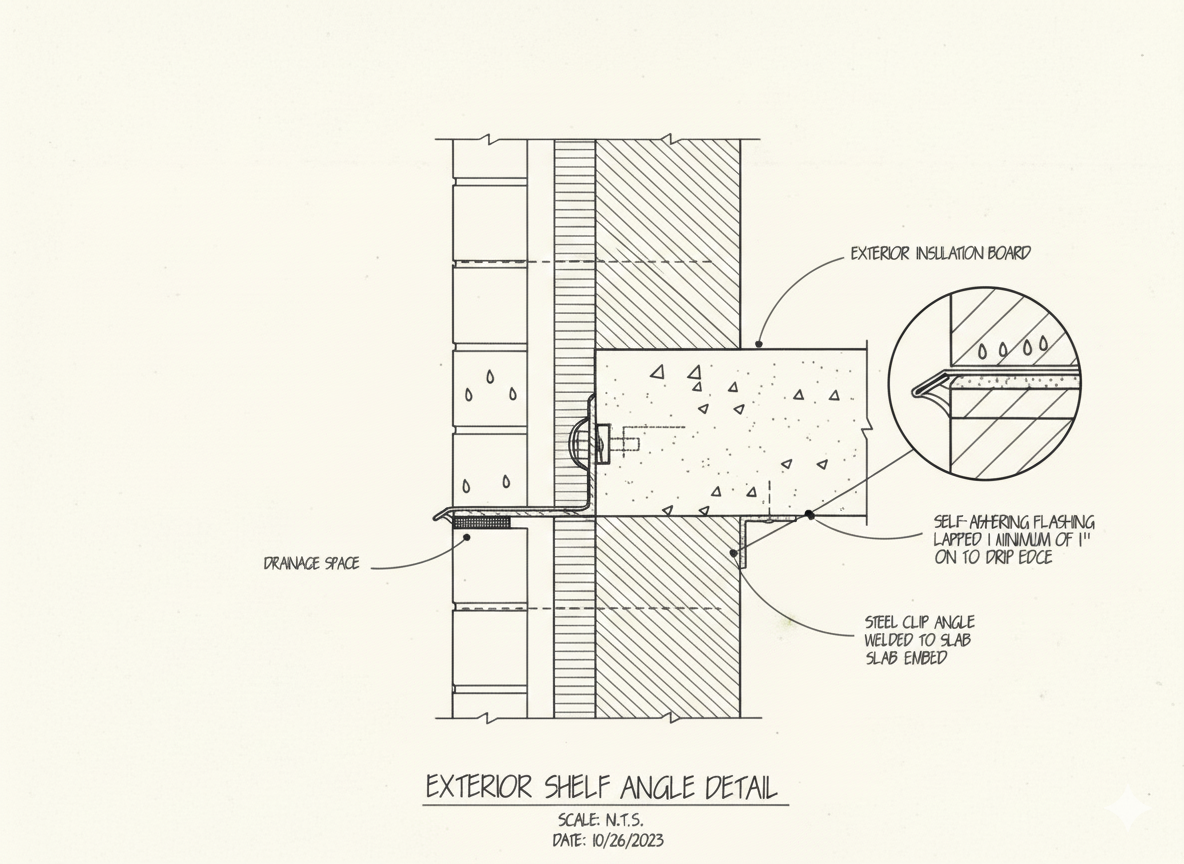
The coordination here is critical. Your shelf angles need thermal breaks or you're creating a giant thermal bridge through the building envelope. Those elevator divider beams need to be exactly where the elevator drawings show them. And good luck if your window wall supports conflict with the slab edge reinforcing... that's why we review submittals.
Similar to masonry submittals, embedded steel requires tight coordination between trades to prevent conflicts and ensure proper installation sequencing.
⚡ Floor Gratings, Drain Pans, and Trench Covers
Grating submittals include shop drawings showing panel dimensions, bar spacing, support angles, and load capacity data for galvanized or stainless steel gratings used at areaways, mechanical platforms, elevator pit covers, and trench drains.
These feel minor until they're wrong. That elevator sump pit frame? It needs to be galvanized, properly sized, and able to support someone walking on it during maintenance. The mechanical platform grating has to handle the weight of multiple people plus equipment without deflecting.
What grating submittals should cover:
- Shop drawings with panel dimensions and bar spacing
- Support angle details and anchorage
- Load capacity calculations
- Material specifications (galvanized or stainless steel)
- Finish requirements for corrosion resistance
- References to NAAMM standards
Material selection matters here too. Wet areas need galvanized or stainless steel. Your standard painted steel grating isn't going to last in an elevator pit that occasionally floods.
🚧 Bollards and Protective Metalwork
Bollard submittals show pipe diameter, wall thickness, concrete fill, anchorage details, and finish specifications for steel posts protecting building elements from vehicle impacts at loading docks, parking garages, and utility areas.
Bollards seem straightforward until you think about what they actually need to do. Stop a vehicle. That means proper embedment depth, adequate pipe wall thickness, and solid connections to the concrete. Your submittal needs to show all of that.
Typical bollard submittal requirements:
- Pipe diameter and wall thickness specifications
- Concrete fill details (if applicable)
- Embedment depth and anchorage to concrete
- Finish options (galvanized, painted, sleeve covers)
- Installation details and spacing
- Product data for manufactured bollard systems
Corner guards are another protective item that often ends up in these submittals. They're usually stainless steel angles that protect wall corners from cart damage in corridors and back-of-house areas. The submittal covers material gauge, finish (brushed? mirror?), and installation method.
A metal fabrication submittal is part of a larger submittal package in construction. Learn how to organize product data, samples, and shop drawings into a complete package the architect can approve efficiently.
🪟 Architectural Railings and Glass Systems
Glass railing submittals require shop drawings showing post layout, glass panel dimensions and type, bracket attachments, section details, and structural calculations proving the system meets deflection limits and code-required loads while matching architectural intent.
Modern multifamily projects love glass railings. Balconies, rooftop terraces, amenity spaces. These submittals get detailed because glass railings are highly visible and code-critical.
Glass railing submittal components:
- Shop drawings showing post layout and spacing
- Glass panel dimensions, thickness, and type (tempered/laminated)
- Metal framing system details (posts, channels, base shoes)
- Bracket and attachment details
- Structural calculations with PE seal
- Section details showing edge conditions
- Finish samples and specifications
You're coordinating glass thickness (usually tempered or laminated safety glass), the metal framing system (posts, channels, or base shoes), anchoring details, and making sure the whole assembly is engineered properly. The architect cares about aesthetics. The structural engineer cares about capacity. Your submittal needs to satisfy both.
🛗 Elevator Shaft Metalwork
Elevator metalwork submittals include shop drawings for hoist beams (typically 3-ton capacity), divider beams between adjacent cars, pit ladders, and sump pit cover frames, because elevator suppliers usually exclude these items expecting the general contractor to provide them.
Here's something that catches people... the elevator supplier's package says "hoist beam by others." That means you. The misc metals scope typically includes the lifting beam at the top of the shaft used during elevator installation and maintenance.
Elevator-related metal fabrication items:
- Hoist beams (lifting beams) with capacity ratings
- Divider beams between elevator shafts
- Pit ladders for maintenance access
- Sump pit cover frames with gratings
- Support steel for guide rails
- Anchor plates and connection details
Elevator divider beams separate adjacent elevator cars or support guide rails. Pit ladders provide access for maintenance (required when the pit is deep enough). Sump pit covers keep people from stepping into the drainage area. All of these are your responsibility, and they all need submittals.
How to Handle Metal Fabrication Submittals Efficiently
Metal fabrication submittals require coordination across structural, architectural, and MEP disciplines because the scope often fills gaps in contract documents and interfaces with multiple trades.
The reality is that metal fab submittals surface coordination issues. Sometimes the drawings don't show every piece of support steel needed. Sometimes there are conflicts between what the architect drew and what the structural engineer detailed. The submittal process is where you work through these problems with RFIs and design team input.
Best practices for managing metal fab submittals:
- Organize submittals by spec section (Division 05)
- Reference relevant drawing details and specification paragraphs
- Include complete packages (shop drawings, product data, samples, calcs)
- Maintain a submittal log to track all submissions
- Submit early for items affecting concrete pours or long-lead fabrication
- Cross-check against structural, architectural, and MEP drawings
- Address coordination issues through RFIs before resubmitting
Keep your submittals organized by spec section. Reference the relevant drawing details and specification paragraphs. Include everything in one package... shop drawings, product cut sheets, finish samples, engineering letters. Missing something just means resubmitting later.
And maintain a submittal log. You're going to have dozens of these metal fab submittals on any decent-sized project. Tracking them keeps you from holding up concrete pours because nobody submitted the embed plates on time.
Using construction submittal software helps streamline this process by organizing submittals, tracking review status, and sending automatic reminders when items are waiting for approval. Instead of chasing down email chains and Excel spreadsheets, you can see exactly where each metal fab submittal stands and who needs to act next.
The Bottom Line on Metal Fab Submittals
Metal fabrication submittals demonstrate your project management rigor and technical expertise by verifying that custom steel components meet specifications and codes before fabrication, preventing costly field issues and establishing quality standards for installation.
These submittals might seem tedious. But they're protecting you. They confirm the right materials and details before fabrication starts. They create a paper trail if problems arise later. And they show that you're running a tight project where nothing gets built until it's been properly reviewed and approved.
That's the kind of thoroughness that wins you repeat clients and keeps projects on schedule.
Frequently Asked Questions About Metal Fabrication Submittals
What is included in a typical metal fabrication submittal package?
A typical metal fabrication submittal package includes shop drawings showing dimensions and connections, product data sheets for materials and manufactured components, finish samples, structural calculations for engineered items like railings, and relevant certifications such as welder qualifications. The package must reference specification sections and drawing details for easy review.
When should metal fabrication submittals be submitted during construction?
Metal fabrication submittals should be submitted early in the construction schedule, particularly for items affecting concrete pours (like embed plates) or requiring long lead times (like custom railings). Submittals for embedded items typically need approval before concrete formwork begins, while fabricated items like stairs should be submitted several weeks before installation to allow for fabrication time.
Who is responsible for preparing metal fabrication submittals?
The steel fabricator or miscellaneous metals subcontractor typically prepares metal fabrication shop drawings and assembles the submittal package. However, the general contractor is responsible for reviewing the package for completeness, coordinating with other trades, and formally submitting it to the design team for approval.
What's the difference between shop drawings and product data in metal submittals?
Shop drawings are custom fabrication drawings showing how the fabricator will build specific items like stairs or railings, including dimensions, connections, and details unique to the project. Product data consists of manufacturer cut sheets for standard items like ladder systems, anchors, or coatings that meet specification requirements but aren't custom-fabricated.
How long does metal fabrication submittal review typically take?
Metal fabrication submittal review typically takes 2-4 weeks depending on the complexity of the items and the design team's workload. Complex engineered items like glass railing systems requiring structural review may take longer. Using real-time status tracking helps contractors know exactly where each submittal stands in the review process.
What are the most common reasons metal fabrication submittals get rejected?
Common rejection reasons include missing information (such as structural calculations or finish specifications), conflicts with architectural or structural drawings, non-compliance with building codes, incorrect materials specified, insufficient connection details, and missing coordination with other trades like masonry or curtain wall systems.
Streamline Your Metal Fabrication Submittal Process
Managing dozens of metal fabrication submittals across stairs, railings, embedded steel, and elevator components doesn't have to mean drowning in email chains and spreadsheets. SubmittalLink helps general contractors organize, track, and approve submittals faster with automated workflows and real-time status updates.
See how SubmittalLink can cut your submittal turnaround time in half. Book a demo today and discover why contractors on commercial and multifamily projects trust SubmittalLink to keep their submittals moving.